An NYC Executive meeting on 16/12/2025 presented a new report by the NYC Director of Public Health. We decided to take the opportunity to question the policies employed within NYC with respect to green space and active travel and how they benefit health.
Whitby has many areas with high indices of multiple deprivation, as highlighted in the 2025 data.
It also has some of the lowest levels of cycling infrastructure in the county along with the lowest uptake in cycling, as well as poor quality walking/wheeling infrastructure, with investment in active travel schemes non-existent.
Additionally it is well below minimum standard in terms of green space availability and accessibility, with much used areas being sold off (for housing), contrary to the wishes of local residents, on a regular basis. Many organisations (and indeed also the Director of Public Health) have highlighted the demonstrable positive link between health / well-being and active travel, as well as access to local green space.
The Director of Public Health’s 2025 report emphasises the statutory duty of the local authority to improve the health and well-being of its residents. It also highlights a few areas where Public Health may be influencing the decision making process in the council.
WHAT influence does Public Health data, such as indices of multiple deprivation, have on
- decisions around Active Travel schemes selected for funding
- decisions around selling off of green space?
and if there is no influence currently, WHEN is North Yorkshire Council going to utilise such data for such decisions (as part of its duty to improve public health)?
The NYC response was provided by the NYC Exec Cllr for Health and Adult Services, Michael Harrison, as follows
We have replied to the councillor as follows
Dear Cllr Harrison,
many thanks for your reply to my question to the NYC Executive meeting on 16/12/2025.
Whilst I agree with some of the points made in the question, I don’t accept everything that is stated in it. The question says Whitby has some of the lowest levels of cycling infrastructure in the county along with the lowest uptake in cycling, as well as poor quality walking/wheeling infrastructure, with investment in active travel schemes non-existent, and that it is well below minimum standard in terms of green space availability and accessibility. I don’t accept this.
You don’t define exactly what you don’t accept, nor the reasons why.
We, Whitby Community Network CIC and the registered charity Whitby & Esk Valley Active Travel, strongly believe in evidence-led decisions and basing all statements on data as much as is possible. Additionally all of the data that we rely on to make claims are presented openly and transparently. Anyone can view them, and anyone can challenge them. We will now go through the points raised.
“Whitby has some of the lowest levels of cycling infrastructure in the county along with the lowest uptake in cycling”
The most reliable / recent stats on cycling uptake would be from the Active Lives Survey carried out by Sport England. To be able to split cycling uptake by borough we have to go back to just before NYC was established (since from that point onwards all survey results are solely quoted by local authority). See
https://www.whitbyactivetravel.org.uk/demographics/#activity_level
As shown, the Scarborough borough is relatively (compared to the rest of North Yorkshire) low on cycling uptake, yet average on walking uptake. The analysis also shows that when looking at levels of infrastructure between the 2 main towns in that borough, Whitby is significantly behind in terms of actual infrastructure. As a consequence it is a reasonable judgment call that Whitby uptake is behind Scarboroughs (even when this survey was taken). So the claim is actually a very rational conclusion.
Note : the Active Lives Survey considers residents of a location (and not including visitors) so is actually the most appropriate measure to use when we consider Public Health for a location. The statutory duty of the local authority is to the resident first and foremost.
Yes, Whitby urban area has precisely 2.5km of the “Cinder Track” with solely 1 safe cycling access point in the urban area for people on bikes – the access point being a very steep ramp that is a barrier for disabled people. Various components of the SBC restoration plan were never implemented when the surface was provided. So we also have confidence in the statement about “amongst the lowest levels of cycle infra in the county”.
Clearly the study was the order of 3 yrs ago, but in that time Scarborough (district) has received the order of £4m in funding for cycling infrastructure upgrades, whilst Whitby has received nothing. That will only lead to exacerbate the difference.
We would, however, like to see mapping data (from NYC) on levels of infrastructure against locality so that we can have further confidence in that claim. Similarly, we would like to see uptake stats against locality. These would all give a much better basis for comparison. And indeed at a meeting with Rhiannon Letman-Wade, the new Active Travel Commissioner for Y&NY, we did request exactly that.
If NYC disagree with this analysis, if they could kindly present their evidence, so that we all have a better understanding.
“as well as poor quality walking/wheeling infrastructure”
Whilst Whitby district has some of the most scenic walking countryside, the infrastructure in many places does not match. Also we have a town that is overrun by cars, with little evidence of any implementation of the Local Plan “promote sustainable modes of transport”, with a general lack of crossings, which becomes barriers to people who would otherwise walk.
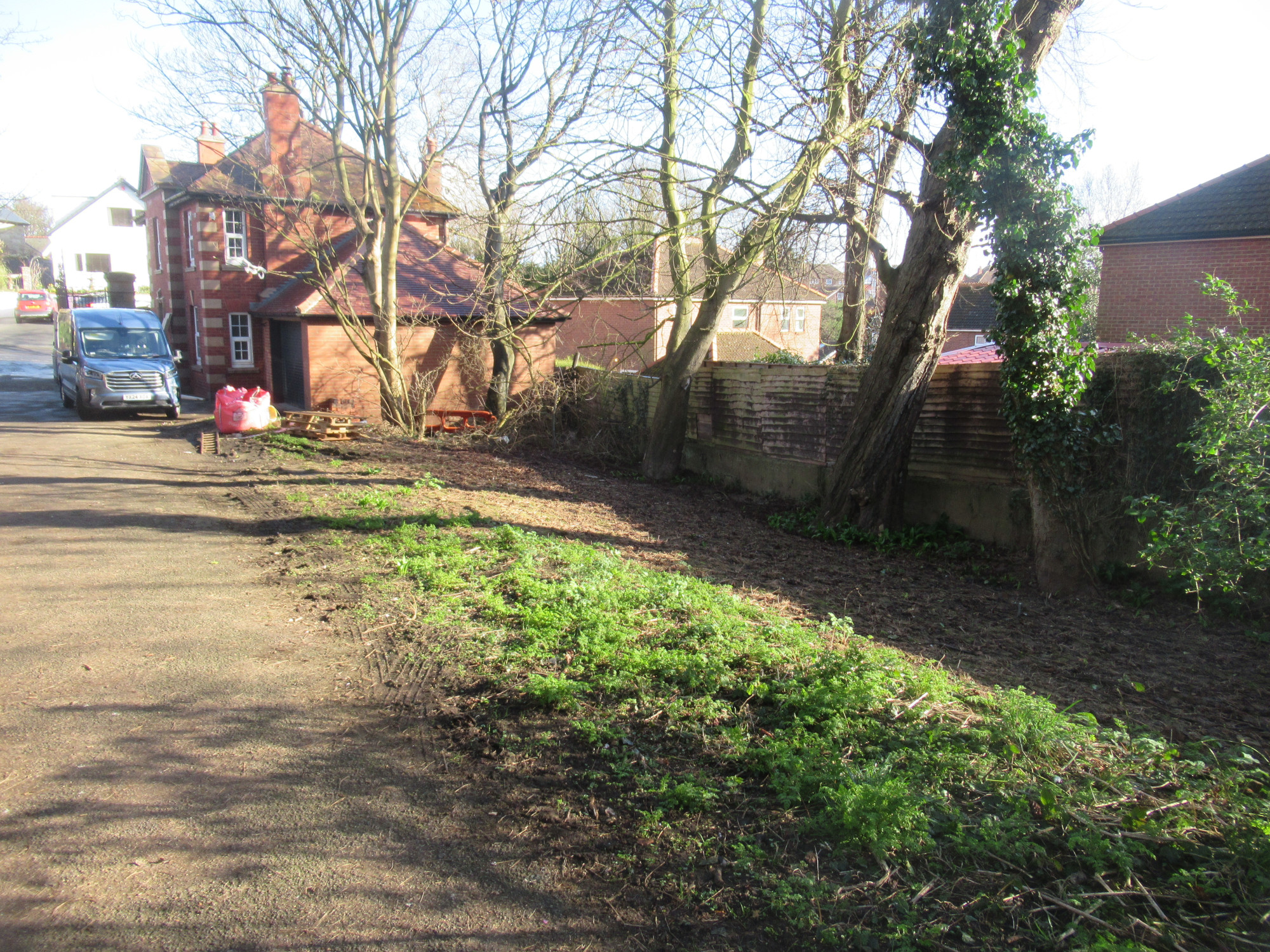
We have green space with crumbling or muddy paths, and that have had no maintenance (other than grass cutting) since the 1970s – that would also fail an Equality Act 2010 assessment. That acts as a deterrent to using the paths, and hence walking.
We have Whitby business park which, once you go beyond the few retail outlets on the main road, is a virtual no go zone for pedestrians and disabled.
https://www.whitbyactivetravel.org.uk/2024/12/06/whitby-business-park-active-travel-provision/
We have many other examples.
Does the above claim that the walking / wheeling infra is worse than in other parts of the county? No, it may well be poor in other areas. It simply states that it is poor quality (and hence a deterrent to utilisation), and needs to be improved for people to use it as much as is possible. That should be of interest to public health.
“with investment in active travel schemes non-existent”
The investment in active travel schemes in Whitby district has been exactly that of late. The last investment of any significance was the only cycle infra scheme here ever, £315k from DfT/Sustrans in 2021 for 3.5km of “Cinder Track” surface.
There is a “Town Deal” scheme for town centre still awaited, but that will only give minimal benefit for the pedestrian (wider pavements, improved crossing) only in the very centre of town, and nothing at all for the person on a bike in its most recent proposal.
It has also to be said that NYC funding from Active Travel England is limited by its low capability rating, and so there is not much “to go round”.
“it is well below minimum standard in terms of green space availability and accessibility”
The last audit of green space in this area was performed in 2014 by SBC. It concluded that Whitby was below their “local standard” (termed a minimum standard by other organisations) in terms of quantity, and several green spaces were of poor quality. We took this report and tried to reproduce it, using the same basic methodology, and this resulted in our analysis, which corrected errors in the SBC analysis, as well as bringing it up to date with the various losses of spaces. You can find it here
https://www.whitbycommunitynetwork.org/green-space/
The deficit to the minimum standard is significant … about the equivalent of 3 Pannett Park’s. But that is not where it ends, because we considered accessibility / inclusivity of green spaces also, and the deficit becomes far worse. You will be fully aware of the ageing population and the need to make areas more inclusive, and this challenge is significant. This is backed up by measures from Natural England, and Fields In Trust saying the same thing – all on the above link.
At a meeting with the NYC Head of Parks, we asked “does NYC have a mapping of all green spaces in the county … “, and the answer was that they were not yet at that point and wouldn’t be for some time. We subsequently provided them with our mappings of all Whitby green spaces – equally available from our website – in the interest of trying to “work with” NYC.
If NYC disagree with this analysis, if they could kindly present their evidence, so that we all have a better understanding. This was provided to SBC in its final year of operation, but no response was forthcoming.
Public health data is regularly used, in combination with other sources of information, to support decision-making in a variety of areas across the council. This includes decisions relating to active travel and green space. For instance, the council has developed a total of ten Local Cycling and Walking Infrastructure Plans (LCWIPs) for the main towns across North Yorkshire over the last few years. There is a ‘long list’ of potential active travel schemes based on the corridors from all these ten LCWIPs across the county, including the Whitby LCWIP, as well as other schemes in other areas.
We are well aware of the LCWIPs. We had to campaign for the Whitby LCWIP in the first place, because all evidence was that the town would not be getting such a document (nor Thirsk either). And in fact, we suggested the idea that if NYC provided one for Whitby and then Thirsk, then NYC could claim to have an LCWIP for all towns of population 10000 or above – something they now do claim to Active Travel England. Whitby’s LCWIP only arrived in May this year – likely a significant reason why the investment here has been “non-existent”.
Obviously an LCWIP is not infrastructure spend. It is generation of a plan with no timescales / funding, but still a necessary step before you can get infrastructure spend – a point made to Cllr Duncan while in the Transport post.
When a funding opportunity arrives, we assess all schemes against the funding criteria. For example, the Department for Transport’s Active Travel Fund Tranche 4 (ATF4) criteria included ‘targeting areas with poor health outcomes and with high levels of deprivation’, so public health data, the index of multiple deprivation, is an integral part of the decision making process to prioritise schemes.
Sadly the Whitby LCWIP did not exist in that timeframe, as a result the available schemes would presumably not have targeted anything in this district.
It has to be said though, if a scheme does not explicitly mention public health, that does not mean that public health cannot also be used as a factor in scheme selection, as long as it fulfils the basic outline of the funding.
In summary, public health does play a part in scheme sifting for bids, but to what degree is dependent on the funding criteria and the type of schemes the fund is available for.
Specifically relating to green space, the council considers a wide range of factors when deciding whether to dispose of its landholdings, including current use, potential future opportunities and the outcomes that could be achieved from each site.
Whilst it is recognised that green space can contribute significantly to improved health and wellbeing, the level of impact depends on various factors, so sites are assessed on a case-by-case basis.
Where land is classified as public open space or amenity land, the council has a statutory obligation to advertise the proposed disposal and consider any objections before proceeding. These requirements allow community users or beneficiaries to have a voice in decisions that might affect future access to green space.
We are fully aware of the process, having been through it on multiple occasions, and in no case has a “proposal” changed due to residents input. There are at least 2 further proposals to remove yet more Whitby green space being touted. Interestingly there has been no quality green space added in the same period – the Broomfield Farm estate has around 2.3ha as an “odour exclusion zone” park, around a sewerage works, with the smell of human excrement wafting across the park area – is that really of benefit to public health?
The simple fact is that any Public Health weighting in this “process” is clearly currently inadequate.
The end result, when residents have basically given up on “the council” catering for their needs, is that residents get together and develop a Neighbourhood Plan, to attempt to protect their green spaces. This is currently out for Draft Consultation, if you weren’t already aware.
https://www.whitbycommunitynetwork.org/whitby-neighbourhood-plan-draft-consultation/
Regards
Whitby Community Network